Table of contents
The Mediterranean villa has been a fixed reference in luxury residential design for the better part of a century. Its silhouette, low and horizontal, its palette, light stone and warm wood, its essential gesture, the dissolution of the boundary between indoor and outdoor living, have travelled from the coasts of Provence and the Cycladic islands to the canyons of Los Angeles and the hills above Cape Town. The arrival of the same design language in Dubai’s villa segment, in confident and well-resolved form, is one of the more interesting architectural developments of the current cycle.
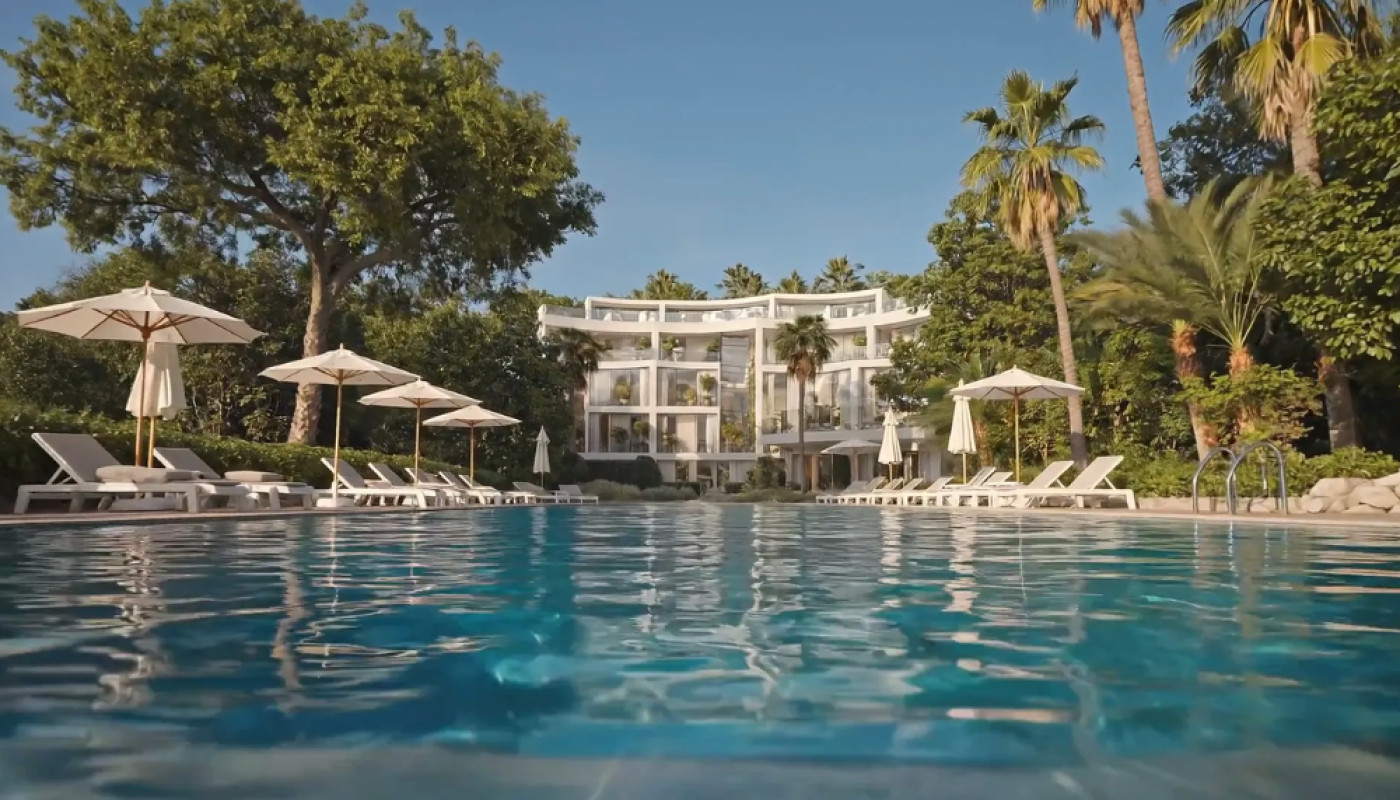
Lunaya by ZAYA, the gated villa community currently anchoring this conversation, is among the more accomplished recent expressions of the Mediterranean idiom in the Dubai context. The architecture is not literal. It does not pretend to be a transplanted St. Tropez villa or a faithful copy of a Capri terrace. It is, instead, a contemporary interpretation that draws on the deep Mediterranean tradition while responding to the climatic, programmatic and cultural realities of the Gulf.
The Mediterranean Tradition and Its Logic
To understand why the Mediterranean language has gained ground in Dubai, it helps to revisit what the tradition actually consists of. The classical Mediterranean villa is organised around three principles. First, the relationship to the sun. The architecture mediates light, with deep eaves, covered loggias and shaded terraces that produce the temperate microclimates the Mediterranean climate requires. Second, the relationship to the landscape. The home does not impose itself on the site. It settles into it, with terraces that step with the topography and walls that absorb the local stone. Third, the relationship to outdoor living. The interior is, in many respects, a secondary space. The principal living happens outside, on the terrace, in the courtyard, beside the pool.
These principles translate readily to Dubai. The city’s climate, like the Mediterranean’s, demands a sophisticated approach to sun and shade. The villa typology, properly executed, can produce outdoor spaces that are habitable for a significant portion of the year. The cultural emphasis on hospitality, on the gathering of family and guests, finds a natural expression in the Mediterranean’s outdoor-centric programming.
AD Middle East has, in its recent coverage of the segment, noted the resonance between Mediterranean architectural principles and the Gulf’s residential traditions. Both, the publication observed, are climates in which the courtyard, the loggia and the shaded terrace are not stylistic flourishes but functional necessities. The Mediterranean idiom, when interpreted with attention to local conditions, can therefore feel less imported than rediscovered.
The Material Palette
The visible signature of the Mediterranean villa is its material palette. Light stone, the colour of dried grass or aged limestone, dominates the elevations. Travertine, with its open grain and its capacity to register the texture of the cutting process, frequently appears in flooring and cladding. Terracotta, in roof tiles or paved surfaces, introduces the warm earth tone that anchors the palette. Oak, often in the form of pergolas, shutters and joinery, provides the contrasting warmth that the stone alone would not produce.
Architectural Digest has, in coverage of contemporary Mediterranean projects across the global market, described this palette as one of the most durable in luxury residential architecture. It ages well. It registers light differently across the course of the day. It avoids the visible obsolescence that more fashionable materials, the high-gloss surfaces and the engineered composites, tend to acquire after a decade.
The materials at Lunaya, as published in the project’s architectural documentation, follow this convention. Light stone elevations. Oak detailing in the joinery and pergolas. Generous use of natural materials in the landscape, with limestone paving, gravelled surfaces and the kind of structured planting that the Mediterranean tradition has refined over centuries. The palette is restrained rather than elaborate, which is itself a position. The decision to work in a limited material vocabulary produces the architectural coherence that distinguishes the well-executed villa community from the less considered example.
The Silhouette
The Mediterranean silhouette is horizontal. The roof lines are low. The proportions are wide rather than tall. The principal living spaces are spread across one or two levels, with the upper levels stepping back to produce the terraces and loggias that the typology requires.
This horizontality is, in many respects, the opposite of the verticality that has characterised much of Dubai’s residential architecture. The apartment tower, the dominant residential form in the city for the past three decades, is by definition vertical. The villa, particularly in its Mediterranean interpretation, offers the visual opposite. The horizontal proportions, properly executed, produce a sense of repose that the vertical typologies cannot replicate.
The silhouettes at Lunaya, as visible in the published renderings and the materials available through the Lunaya by ZAYA architectural brief, lean firmly into this horizontality. The villas read as wide rather than tall. The roofs are low-pitched or flat. The upper levels step back to produce the terraces that the Mediterranean tradition requires. The visual effect, in the rendered context, is one of settlement rather than imposition.
The Indoor-Outdoor Flow
The most consequential principle of the Mediterranean villa is the dissolution of the boundary between interior and exterior. The principal living spaces open onto terraces, courtyards and pool decks through full-height glazing or, in the more committed examples, through sliding wall systems that disappear entirely into the structure. The kitchen extends to the outdoor dining area. The living room flows onto the loggia. The principal bedroom opens onto a private terrace.
The execution of this principle separates the successful Mediterranean villa from the less successful one. The mediocre example produces a glazed wall with a door in it. The accomplished example produces a continuous space in which the interior and exterior are programmatically integrated. The thresholds are calibrated. The materials carry through from inside to outside, producing the visual continuity that the principle requires. The furniture, the lighting and the landscape are coordinated so that the transition is seamless.
Wallpaper has, in its coverage of contemporary Mediterranean residential work, described this calibration as the defining craft of the typology. The publication’s reviews of recent projects in Marbella, the Balearics and the Côte d’Azur have consistently returned to the question of how well the indoor-outdoor flow is resolved. The well-resolved example produces a daily texture of living that the less resolved example cannot match.
The published interior and landscape coordination at Lunaya suggests a serious engagement with this question. The principal living spaces open onto generous covered terraces. The kitchens extend into outdoor dining and cooking areas. The pools are sited so that they read as visual extensions of the living spaces rather than as separate destinations within the plot. The landscape design, with its mature plantings and its structured composition, is integrated with the architecture rather than appended to it.
Why Mediterranean, Why Now
The question of why the Mediterranean idiom has gained ground in Dubai’s villa segment at this particular moment is worth examining. The earlier generations of Dubai villas drew on a wider range of references. The neo-Andalusian motifs of the early Emaar communities, with their tile work and their courtyards, were one strand. The neo-classical references of certain Palm Jumeirah villas, with their columns and pediments, were another. The cerebral modernism of some of the more recent Sobha and Meraas products represents a third.
The Mediterranean language has gained ground, in part, because it occupies a productive middle position between these alternatives. It is warmer than the cerebral modernism, more contemporary than the neo-classical references and more universally legible than the neo-Andalusian motifs. It carries the prestige associations that buyers at this segment of the market expect, the references to St. Tropez, to Capri, to the Costa Smeralda, without the period-piece quality that more literal historical interpretations can acquire.
The second reason is climatic. The Mediterranean tradition has, over centuries, refined the architectural response to a climate that resembles, in its essential parameters, the Gulf’s. The deep eaves, the courtyards, the cross-ventilated rooms, the shaded terraces all translate to Dubai with relatively little adjustment. The architectural language is, in this sense, climatically appropriate in a way that some of the other references are not.
The third reason is the maturation of the buyer base. The Dubai villa buyer of 2026 is more travelled, more architecturally literate and more demanding than the buyer of a decade earlier. The reference points have shifted. The St. Tropez villa, the Marbella estate, the Capri retreat are no longer abstractions. They are the second homes that the buyer either owns, has rented or has been entertained at. The contemporary Mediterranean villa in Dubai is therefore offering a familiar language to a buyer who can now read it fluently.
The Risks of the Idiom
The Mediterranean language is not without its risks. The principal one is literalness. The villa that quotes its references too directly, that imports the iconography of the St. Tropez beach club or the Mykonos taverna, slides quickly from the contemporary into the thematic. The thematic villa, however well executed, dates rapidly. Its appeal is tied to a specific moment in the broader culture’s relationship to its references.
The second risk is material erosion. The Mediterranean palette, with its emphasis on natural materials, requires sustained maintenance to age well. The limestone that weathers beautifully in the Provençal climate behaves differently in the Gulf’s combination of heat, humidity and dust. The successful contemporary Mediterranean villa in Dubai therefore requires not only the architectural choices but the specification and material engineering that allow those choices to perform over time.
The third risk is dilution. As the Mediterranean idiom has gained ground in the Dubai market, the segment has begun to see less considered interpretations that adopt the surface signature without the underlying logic. The well-resolved project distinguishes itself, in this context, by the rigour of its execution rather than the surface of its references.
A Final Reading
The arrival of contemporary Mediterranean architecture in Dubai’s villa segment is one of the more interesting design developments of the current cycle. The language carries the right combination of prestige, climatic appropriateness and contemporary legibility for the moment. The well-executed projects, of which the Lunaya villa collection is an accomplished early example, are demonstrating what the idiom can produce when it is approached with discipline rather than as a stylistic shortcut.
The deeper test, as with any architectural language, will be in the maintenance of the work over time. The Mediterranean villa ages well when the underlying choices, the materials, the proportions, the integration of architecture and landscape, have been made with care. It ages poorly when the choices have been driven by surface rather than substance. The published evidence at Lunaya suggests the former rather than the latter, which is, in the current Dubai villa market, the distinction that matters.
Similar articles

How Seamless Conveyancing Simplifies Property Transactions?

Exploring The Intersection Of Law And Property Management

Strategic Home Staging Tips To Fast-track Your Property Sale

Buying a luxury property in Sint-Maarten: which agency to choose ?

Exploring The Luxury Real Estate Market: Trends And Opportunities In High-End Villas And Properties
